
The dashboard
The page you land on after signing in — whether you are getting paid, what needs you today, and how the year compares to last.
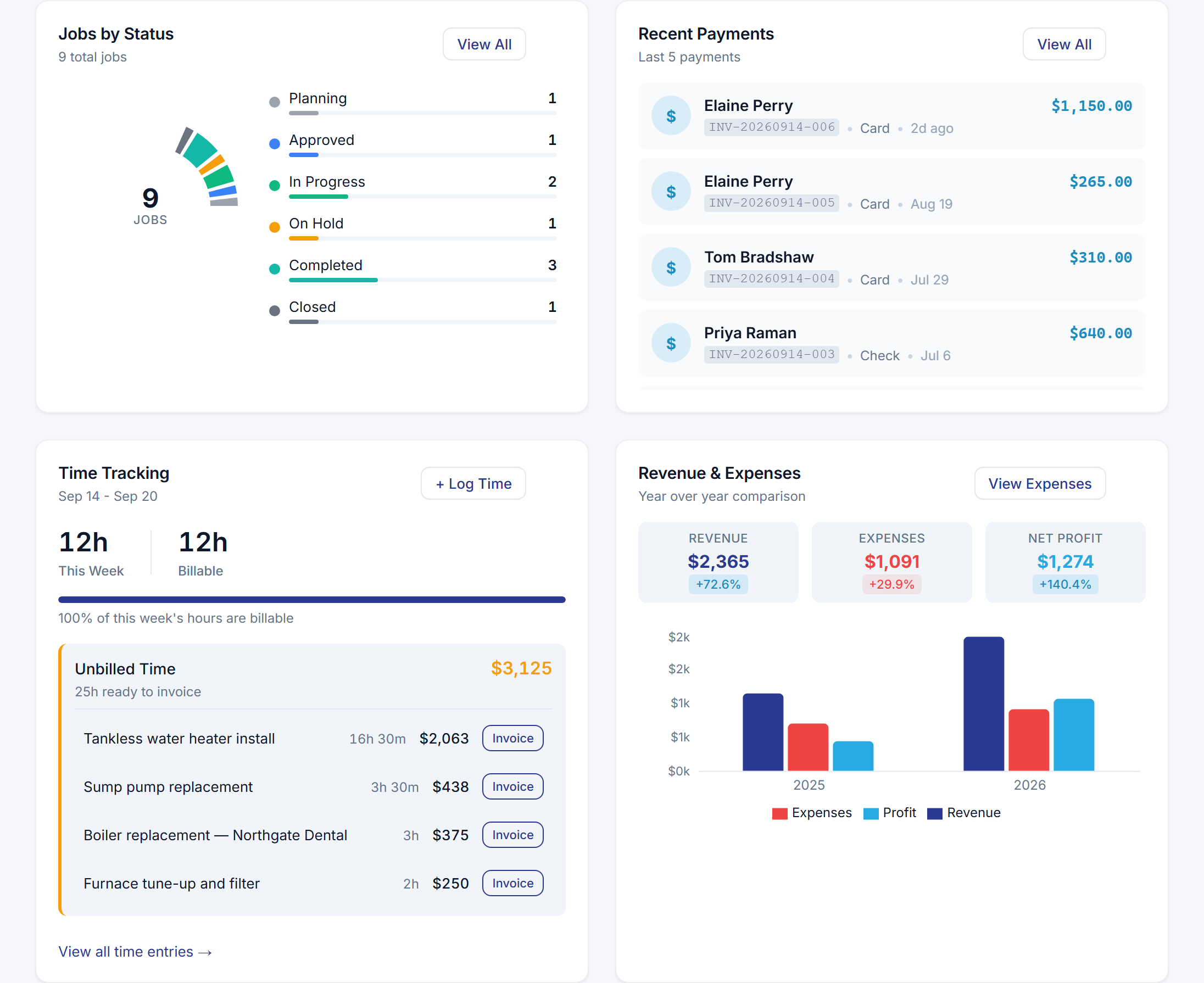
The dashboard is the first thing you see after signing in and the page you come back to between everything else. It answers three questions: am I getting paid, what needs my attention right now, and how does this year compare to last.
Read the numbers literally
Every figure means exactly what its label says. That sounds obvious and it is a stricter promise than it looks.
A number on a dashboard prompts one question — which ones? — so a figure you can click leads to exactly the list it counted. If a total says eleven and the list it opens shows eight, that is a defect here rather than a helpful narrowing.
You can trust what you read and act on it without opening a report to check.
Get set up
New businesses get a Get Started checklist showing what still needs doing — bringing in your client list, connecting a payment account, setting your labor rates. It leads with payment setup, because getting paid online is the thing that changes a business’s week the most.
Nothing on it is a gate. You can ignore the whole list and still send an invoice today.
Trim it to what you use
The dashboard is made of widgets, and you can trim it to the ones you actually look at. A business that does not track mileage should not be scrolling past a mileage panel every morning.
Some widgets belong to the dashboard itself. Others are owned by the feature that produces them and are only shown here — which is why turning a module off takes its widget with it rather than leaving an empty box.
Jump to what needs you
The dashboard is a set of doorways more than a report. At-risk jobs opens the jobs whose margin is drifting; the uninvoiced prompt opens the jobs nobody has billed. In each case the widget is a shortcut into the screen where you can actually do something, rather than a number you then go hunting for.
This page describes Dashboard. It is written from that feature’s record and covers what has shipped, never what is planned.