
The excavator is in the margin
Your vans, machines and tools with what each costs to run, a machine's hours on the job's costs beside labor and materials, readings and service due, inspections, and tools scanned out and back.
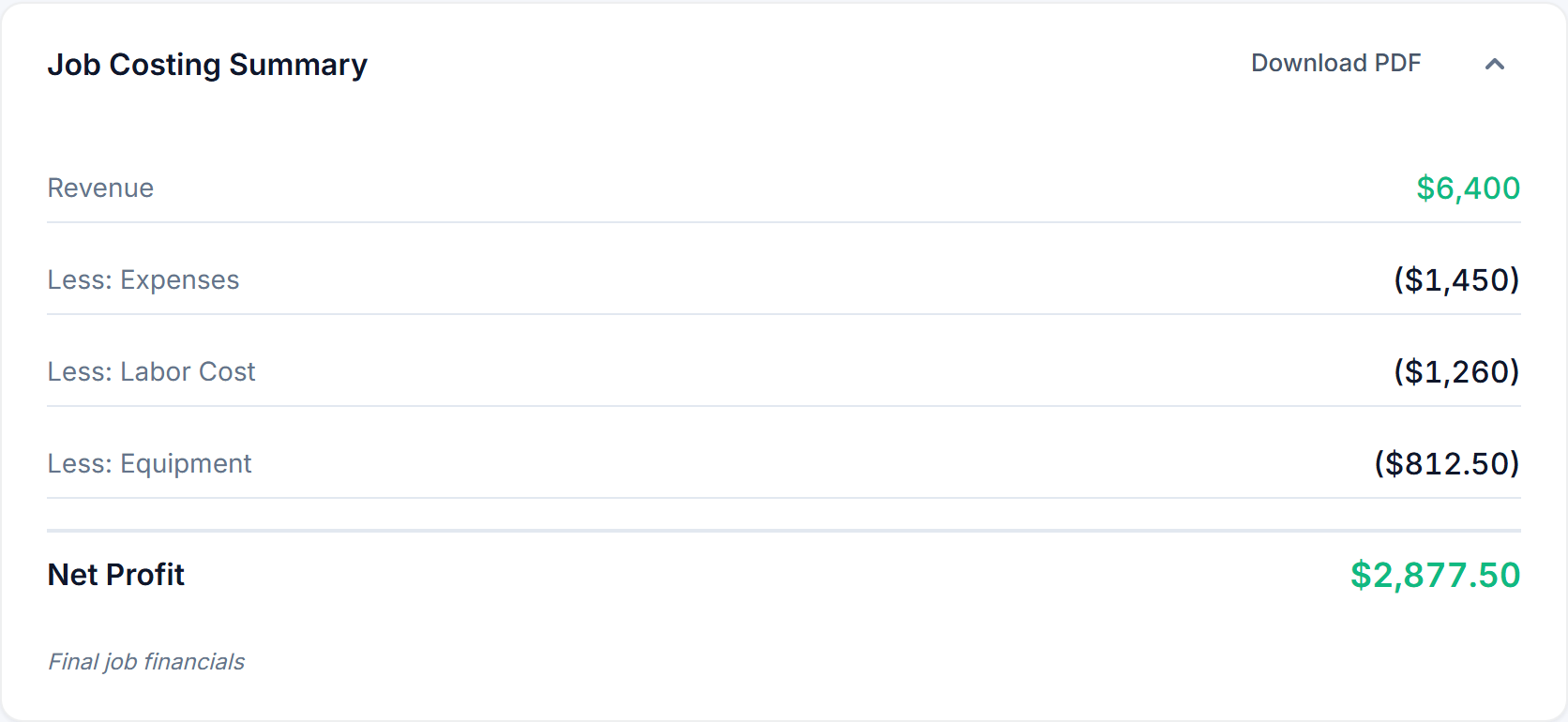
A job costs what the people, the materials and the machines cost, and until now the third one was a guess. Equipment has grown from a list of vans into the record of what your business runs and what it costs you: every vehicle, trailer, machine and tool, on every plan.
Time on the job, at the machine’s rate. Give an item a cost rate and a billable rate, per hour or per day, and log its time on a job the way you log a person’s — six hours of the mini excavator, from the office or from the crew’s phone. The job’s costs carry equipment as a line beside labor and expenses, the proposal estimates it, and the net profit is the one with the machine in it.
Readings, and service due by them. Record the odometer or the hour meter when you have it — from the item, from the crew’s day, from a mileage trip. Service intervals run by miles, hours or months, whichever comes first, and Needs attention says what is due and what is overdue.
What each thing actually costs. Assign fuel, repairs and parts to the item they were for, add what it cost to buy and how long you expect it to last, and its page says what it costs per mile or per hour — and whether it bills more than it costs. Two reports: which items sit idle, and which cost more than they bring in, worst first.
The inspections the crew does anyway. A pre-trip check on the van, a daily check on the machine: a checklist on the phone, a note and a photo on what failed, and a critical fail that takes the thing out of service until somebody fixes it and says so. Templates are yours to edit; two are provided to start.
Who has the core drill. Give a tool a printed label, scan it out on the phone, scan it back. The list says who has what and since when, and a tool out longer than you expect is on the list of things to ask about.
Left on a site. A machine can be left on a job for a stretch of days rather than handed to a person each morning, and the job’s page says what is there.
Bring the fleet. Import equipment from a spreadsheet; a file with a problem is refused with the row and the reason, and a good one previews before it writes.
Equipment is on every plan. A photo on an inspection uses the storage your plan carries.