
The units at a client's property, and the technician who arrives knowing
Write down the furnaces, water heaters and panels you service; each unit's page becomes its history — every visit, what was spent, whether it is past its expected life, when it is due.
An HVAC technician wants to know what is in the attic before climbing into it. A plumber wants the water heater’s model and install date before quoting a replacement. An appliance repairer wants to know this is the third call on the same dishwasher. Every one of those facts was known the last time somebody from your business stood in that house. Now it is written down.
Units live on the client’s record: category, make, model, serial, when it went in and who put it in, the manufacturer’s warranty, a photo of the plate, specs and notes. Add one from the client’s page, from the job it was found on, or from the visit on your phone. A serial typed twice is shown as a match, never refused — plates are hard to read.
Every visit accrues. A job names the units it touched, at intake or on the job, and a refrigerant compliance entry names the unit it is about and reads the serial off it. The unit’s own page is the history: every job, newest first, with what each was invoiced at; every entry; what it replaced and what replaced it; and what has been spent on it beside its age.
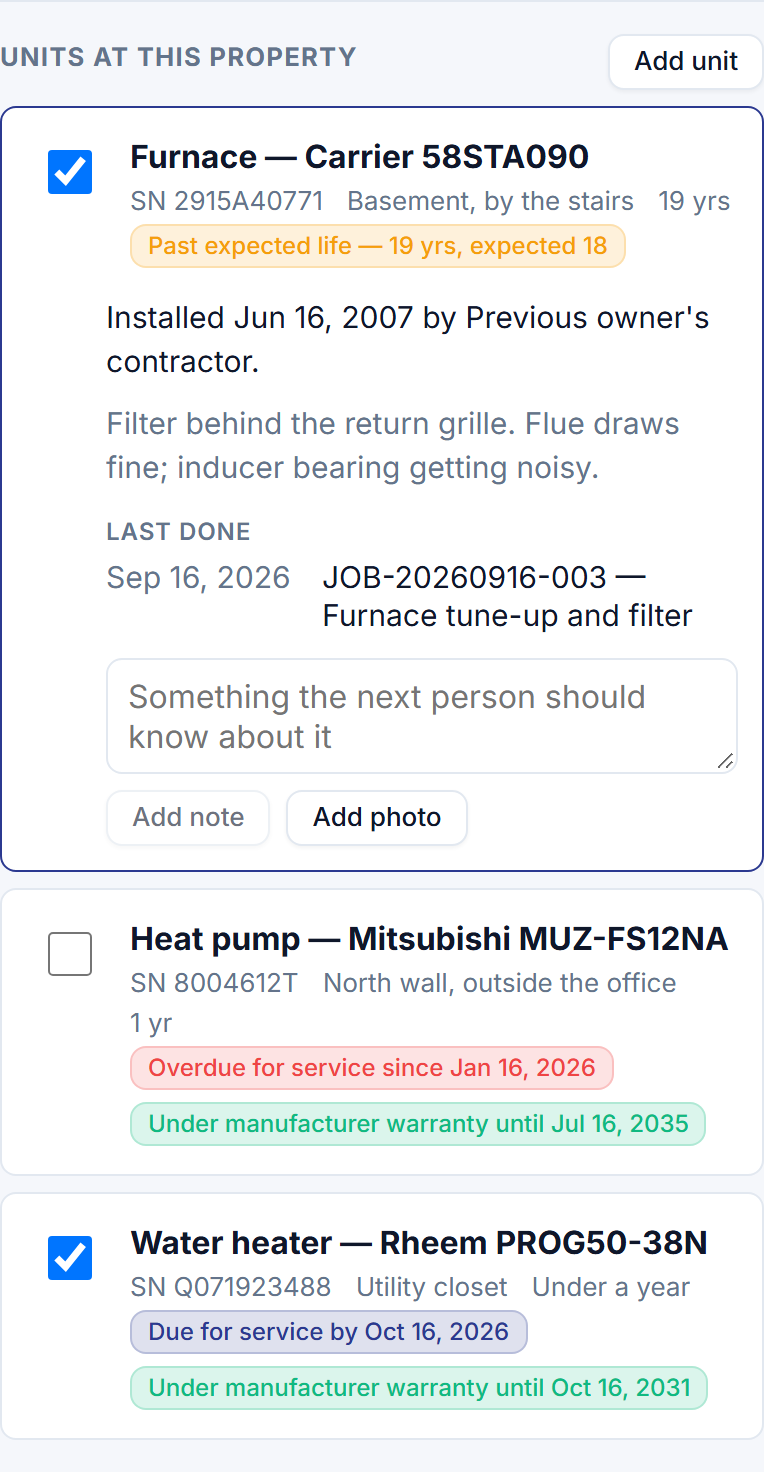
The figures for repair-or-replace. A unit older than its category’s expected life is flagged with the age and the figure — a fact, never a recommendation; the product does not say “replace”. A unit still under the maker’s warranty says until when, and the job shows the maker’s warranty beside the one you gave on your own work. The proposal assistant can write the replacement option with the age, the expected life and what has been spent, and never a price.
Maintenance is due on a unit, not a date. Give a unit a service interval and it is due that many months after the last finished visit. Units due under Clients lists what is coming up and what is overdue, marking the units no agreement covers — the maintenance you could be selling. An agreement names the units its visits are for. Switch on the new automation and the client hears your furnace is due, by email and by text where they have agreed to texts.
On the day. The visit on a technician’s phone lists the units at the address with the plate, the age, the flags and the last three things done. They tick what they touched, write down what they find, and add a photo or a note before they leave the driveway.
Your clients see their own. The client hub lists their units read-only — what, where, when it went in, when it is next due — and a customer booking on their own link is reminded what is due.
Bring the filing cabinet. Import units from a spreadsheet: every row is checked first, a file with a problem is refused with the row and the reason, and a good file previews before it writes.
Client equipment is on every plan. Photos use the storage your plan carries.