
Telling your customer somebody is on the way
When the crew taps En Route, your customer gets a text and a page showing who is coming, when, and what van to look for.
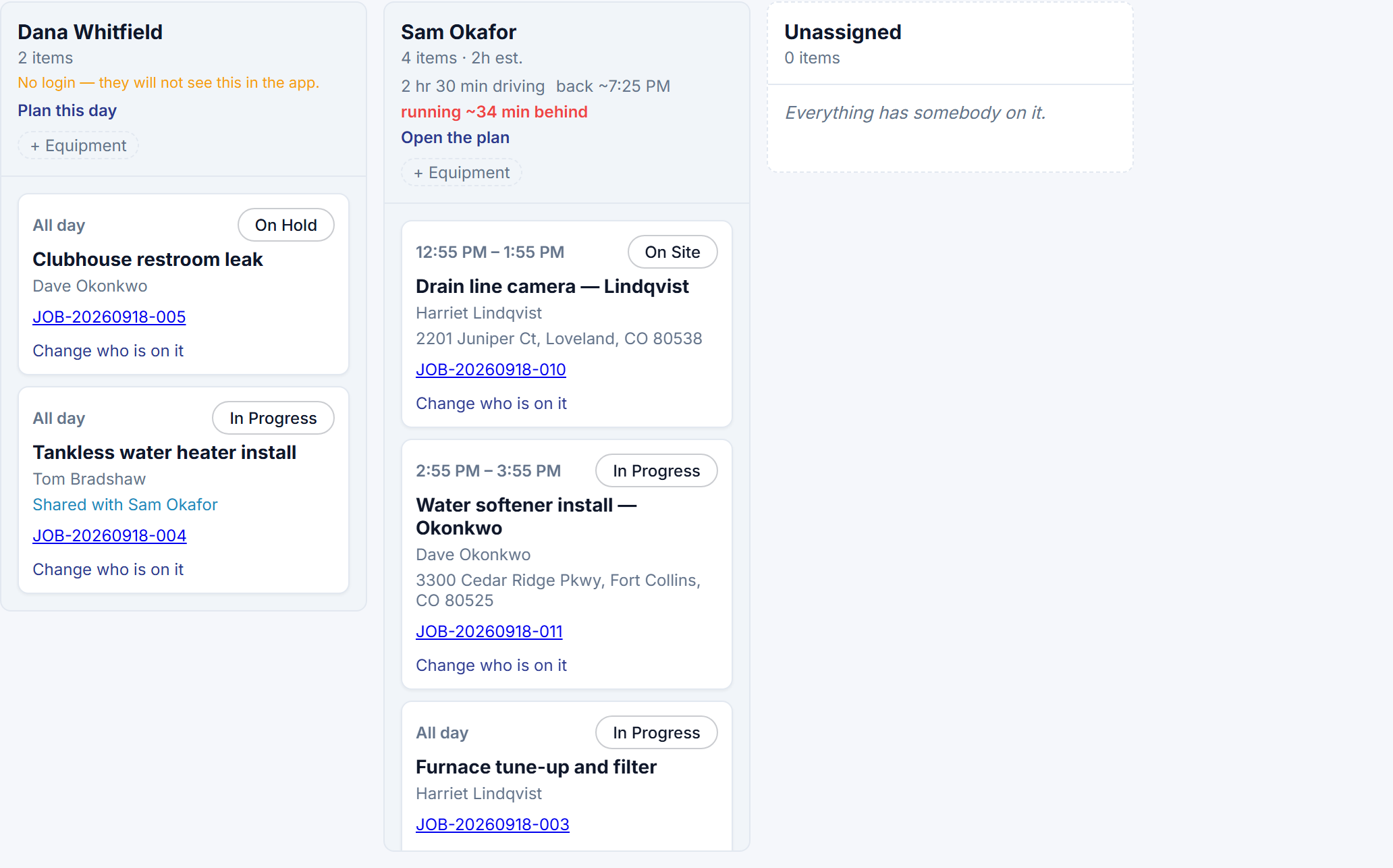
A customer who has booked a visit spends the morning not knowing whether anybody is coming. You know precisely — the crew taps En Route, the day board updates, the job records it — and until now nobody outside the office was told.
This is the other end of that tap.
What your customer gets
When somebody sets off, your customer gets a text saying who is on the way, with a link to a page showing:
- Their name and photograph.
- What they specialize in.
- The appointment window.
- The service address.
- The van to look for.
That turns an unknown vehicle in the drive into a person somebody is expecting.
What happens when the crew arrives
The page stops describing a journey and becomes a confirmation — they are here.
When the link stops working
A week after the job is finished, the link stops working. It described one visit, and a link that outlives its purpose is a link somebody forwarded to a stranger.
See The links you send clients.
Control what is shown about your people
The name, photo and specialty come from what you chose to publish on that worker’s profile — see What your client sees about your people.
Nothing else from a worker’s record is ever shown. A worker with nothing published is not described.
What it costs
The tracking page itself is on every plan. Sending the text needs Professional, because a message costs per send — see Text messages and consent.
Your customer has to have agreed to service texts before one is sent, which is a rule the product applies rather than something you have to remember.
This page describes Customer Tracking — The Page the Customer Opens. It is written from that feature’s record and covers what has shipped, never what is planned.