
Hours against the estimate
See whether a job is taking the hours it was sold at, which jobs are bleeding hours right now, and who logs what.
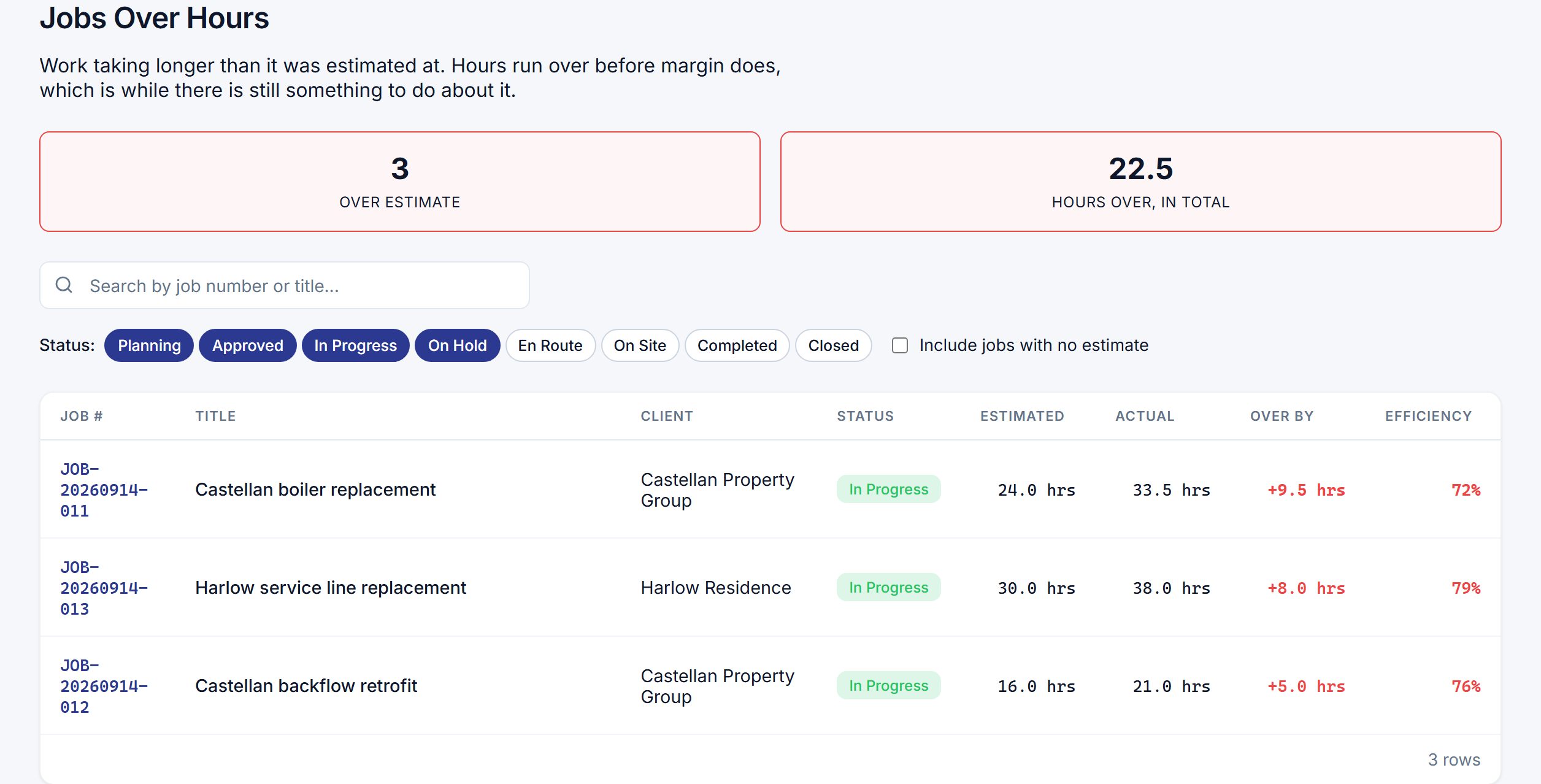
Labor is the largest cost on most service jobs and the hardest to see. You can read a materials invoice and know what the parts cost; you find out what the labor cost after the job is over, if at all, and usually as a feeling rather than a number.
The product holds both halves — what the work was sold at, and what has actually been logged — so this puts them next to each other.
Did this job take the hours it was sold at
The job shows its estimated hours against its actual hours, while the job is still open.
That timing is the whole value. After the job is finished the number is history; during it, it is a reason to send a second person tomorrow or to raise a change order today.
Which jobs are bleeding hours right now
One list, worst first, under Reports → Labor overrun.
Hours overrun before margin does, which is why this list exists separately from the margin reports. By the time the margin has moved, the hours went first — and hours are the thing you can still act on.
Who logged what
The hours behind a job break down by person, so an overrun is a fact about a job rather than an accusation about somebody.
Most overruns are estimating problems, not people problems, and seeing the same kind of work run over across several people is how you find that out.
Where the estimate comes from
The estimated hours come from the job’s frozen baseline — the line items as they were when the proposal was accepted. Changing your rates or your templates afterwards does not move the estimate this is measured against. See Job costing and margins.
This page describes Planned vs Actual Labor. It is written from that feature’s record and covers what has shipped, never what is planned.