How an HVAC business runs on SMG Tools
One heating and cooling business and one system change-out, from a no-cool call to the maintenance plan, in pictures from the product.
This is one heating and cooling business set up and run in SMG Tools, following one air conditioner replacement in the order the work happens: what the business does at each step, why it matters to a company that fixes and replaces systems, and a picture of it in the product. The business is Kestrel Heating & Air — a sample, with made-up clients — and the photos its technician takes were drawn for this page. Every figure is one the product worked out from the business’s records.
Setting up
Start from your website
The first screen asks for the business’s website. Kestrel Heating & Air types its address and chooses Read my website, and SMG Tools reads the services, the hours and the towns it works in, so setup arrives already answered — each answer there to read and change before anything is saved.
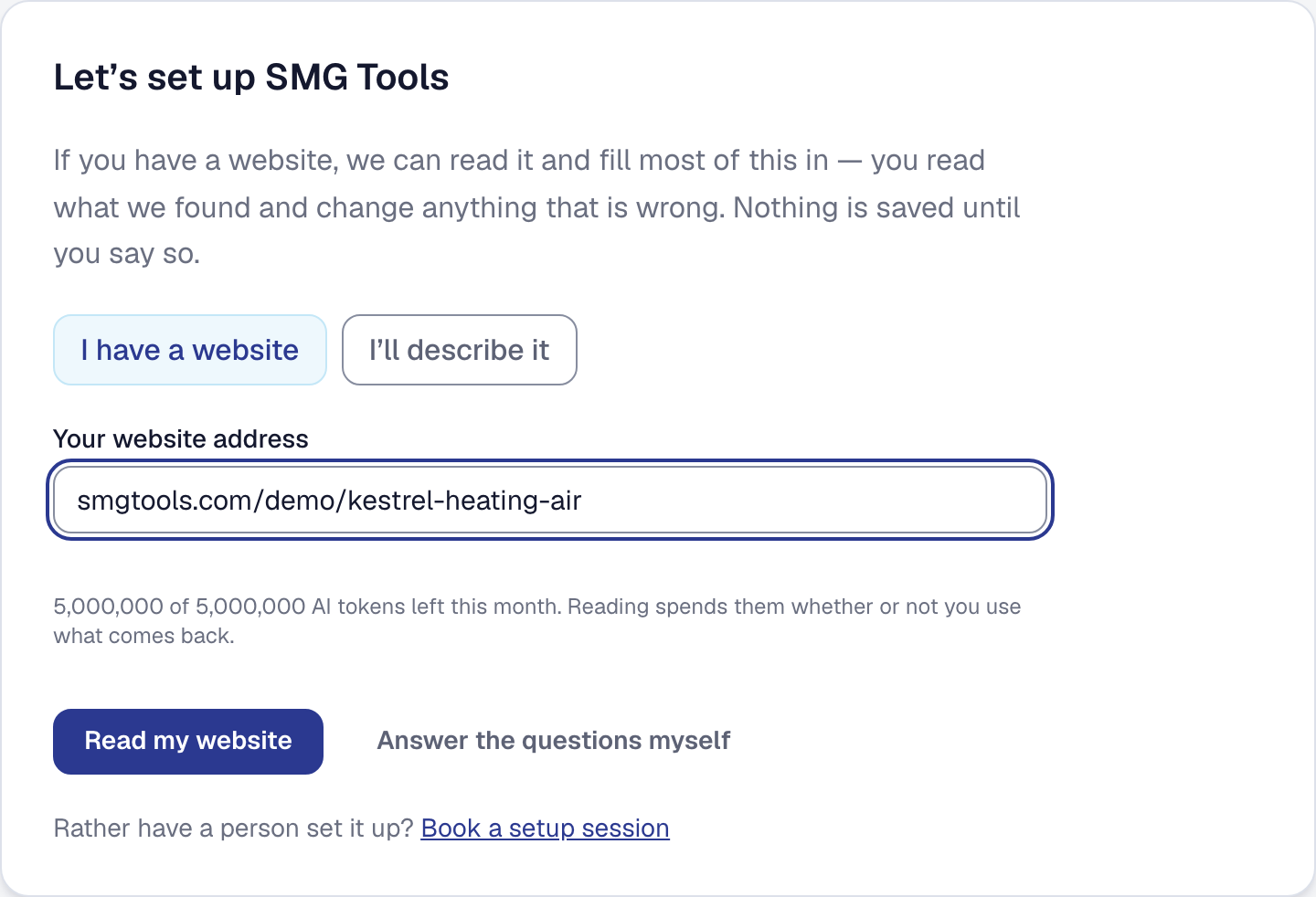
In full: Setting up from your website — Choose how you want to start
Take the HVAC kit
With the trade known, setup offers the HVAC kit with every line ticked: the kinds of work from a tune-up to an equipment replacement, the readings a tune-up takes, the kinds of unit a house has, a System change-out plan template, and the refrigerant record the regulated work keeps. Kestrel Heating & Air took it whole, so the same sheet opened again from the Tools page shows every line as already the business’s.
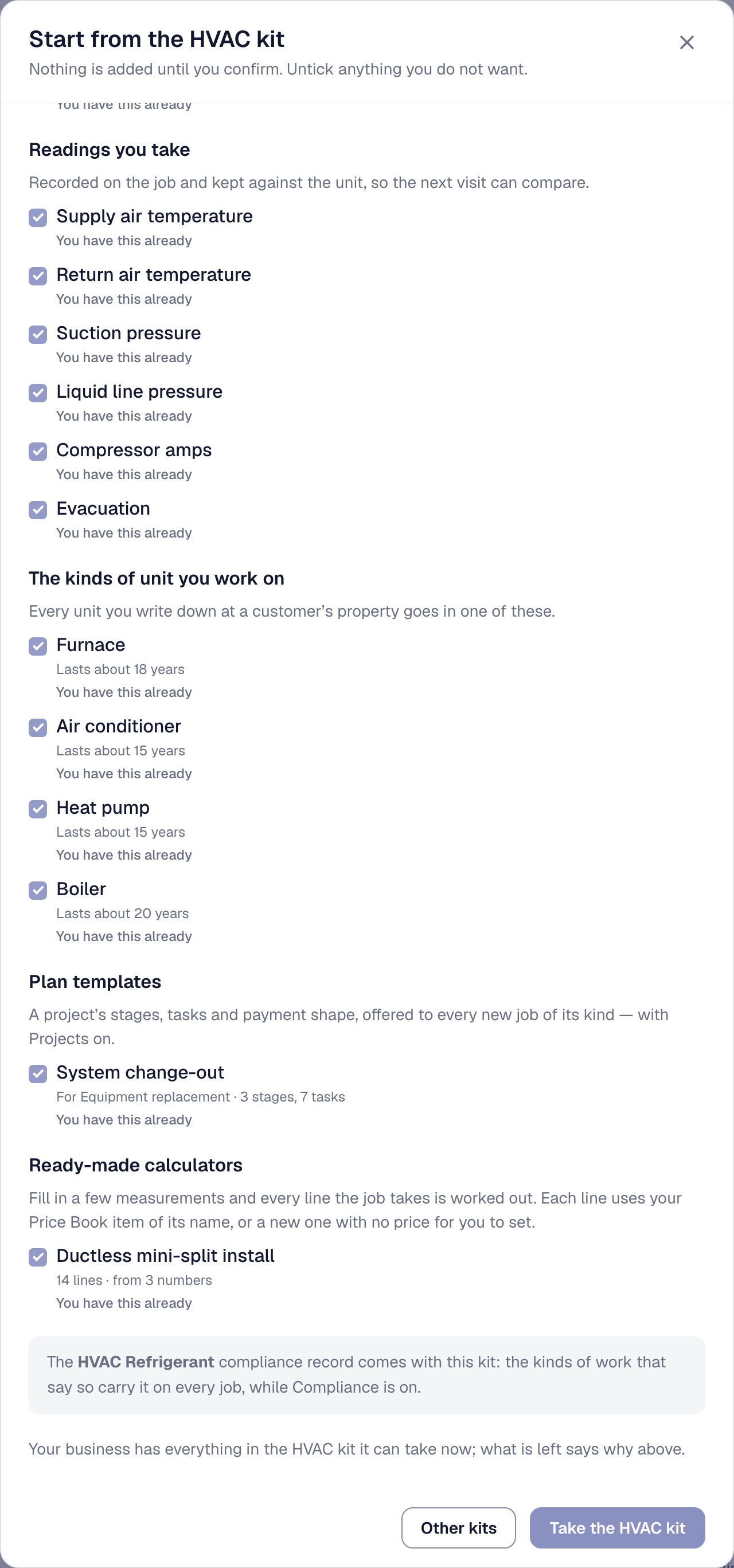
In full: Setting up and hiding what you do not use — Start with the tools for your trade
Price your systems in the Price Book
A heating and cooling company sells systems, not hours, so each system it installs goes in the Price Book as one item: the equipment’s cost and a crew’s hours at the install rate, against its price. The book then says what each one makes — the matched furnace and air conditioner at $13,900 costs $7,000 and makes 49.6% — and what it should sell for to meet the business’s 40% target.
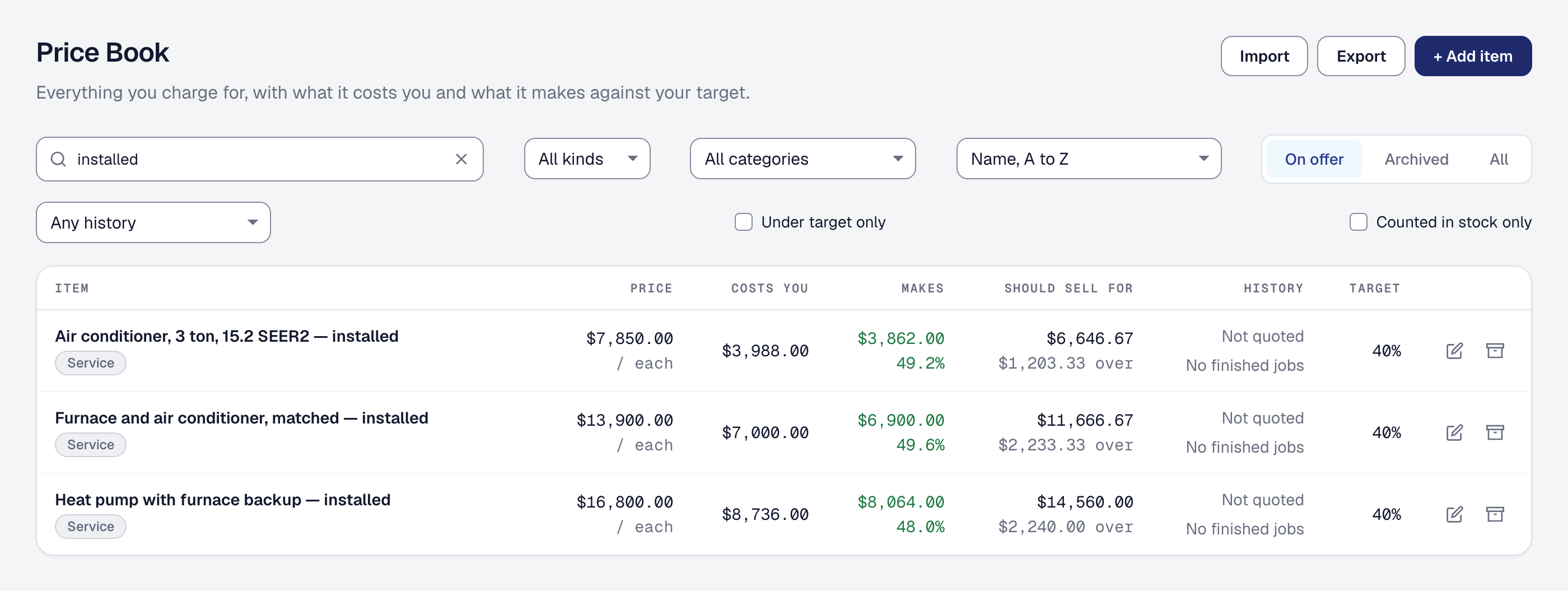
In full: The Price Book — Add the Price Book and your first items
A customer asks
Let a homeowner book the no-cool call
When the air stops on a hot afternoon, the homeowner can book without waiting on a phone line. The no-cool call is the one thing the business offers there, so its page opens straight on the times the technician can make, worked out from the business’s hours and the calendar. The time chosen lands on the calendar as a job, already on the technician’s day.
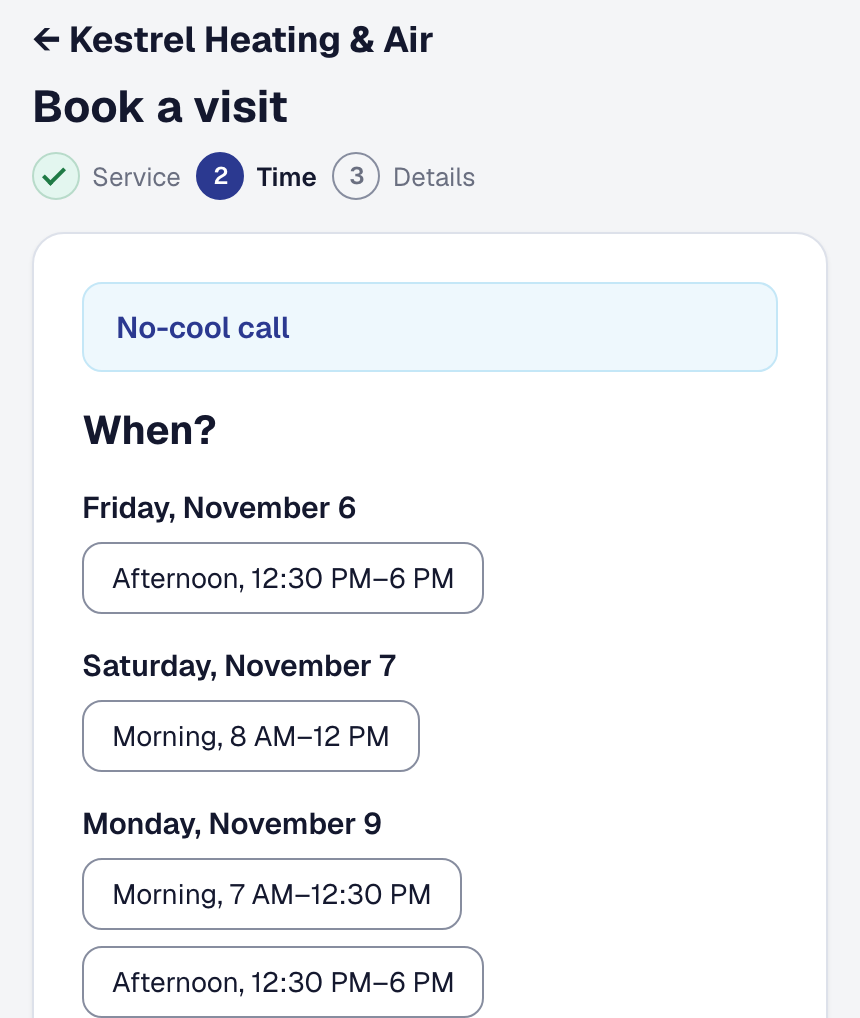
In full: Online booking and availability — Take bookings from your public page
Put the call on the technician's day
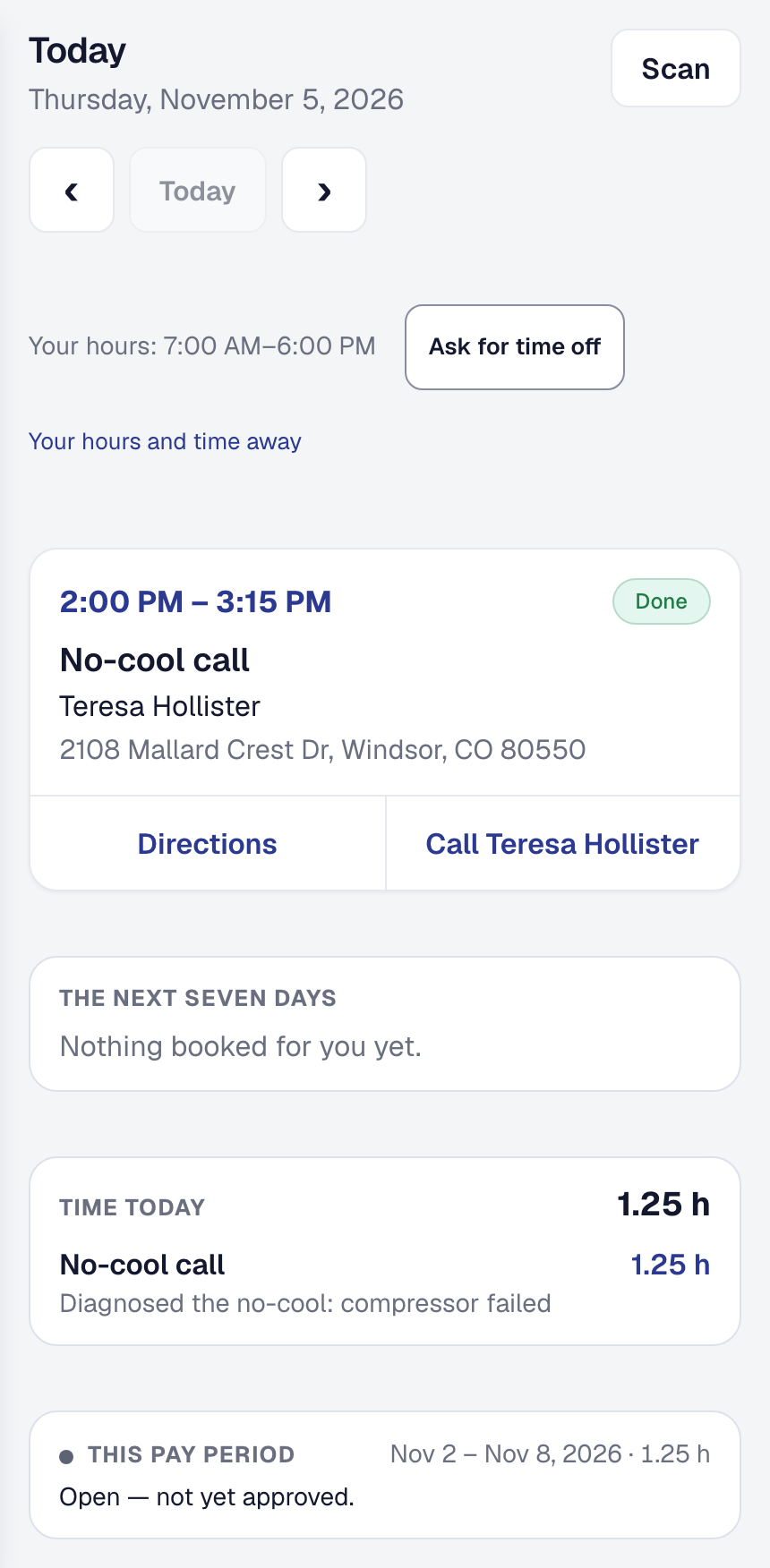
The booking puts the call on the service technician’s own day, on the phone the work is done from: the time, the address, Directions, and a button to call the homeowner before setting off. The hour and a quarter the call took is kept as the day’s time, for payroll.
In full: The crew's phone — Open My Day
Take the readings
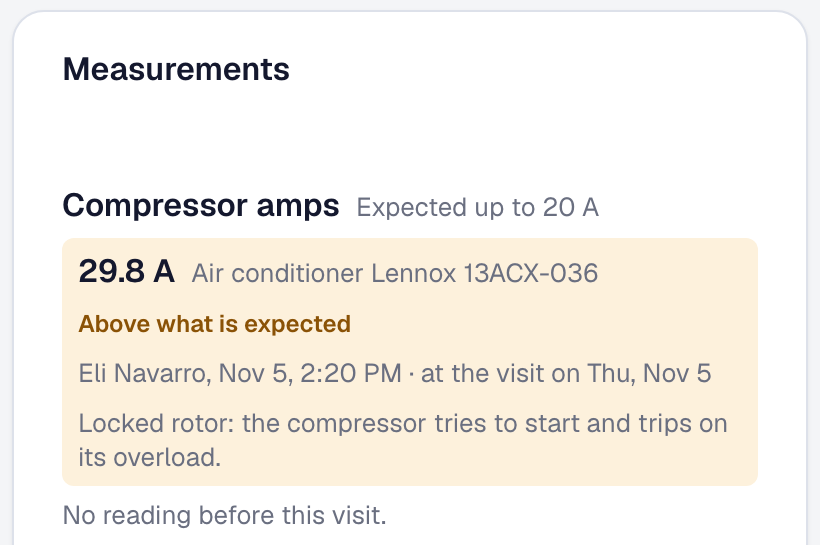
At the unit the technician takes the readings a no-cool call asks for, each kept against the unit it was taken on. The compressor draws 29.8 A against the 20 A the business expects at most, so the reading is marked above what is expected, with the note that it tries to start and trips on its overload.
In full: Measurements and readings — Understand the range and the mark
Put the units on the customer's record
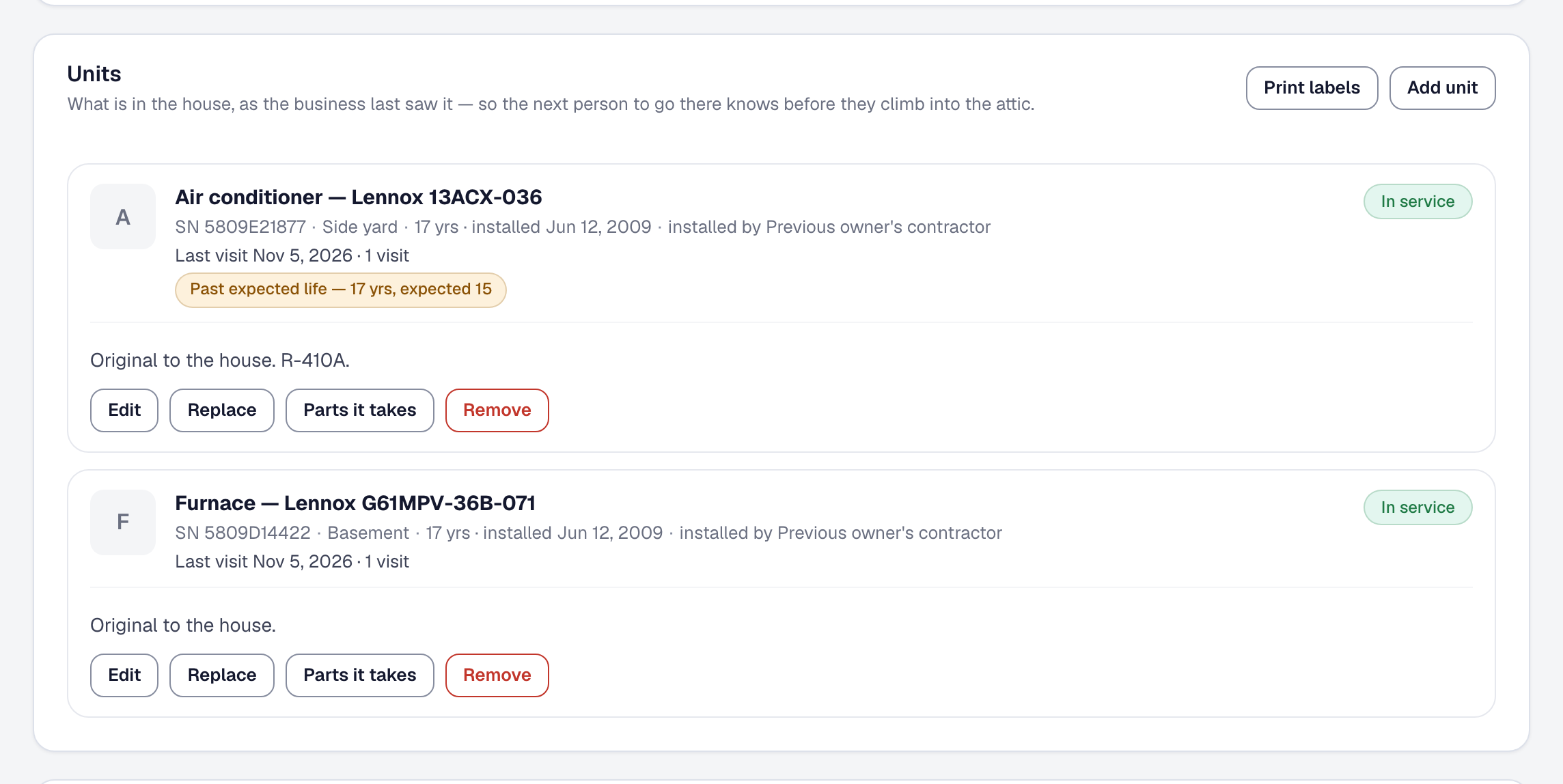
The technician writes down what is in the house: a Lennox air conditioner and furnace, both put in seventeen years ago. The air conditioner is marked past its expected life — seventeen years against fifteen — which starts the conversation about replacing it, and whoever goes there next arrives knowing what is there.
In full: Units at a client's property — Add a unit to a client
Priced and quoted
Quote good, better and best
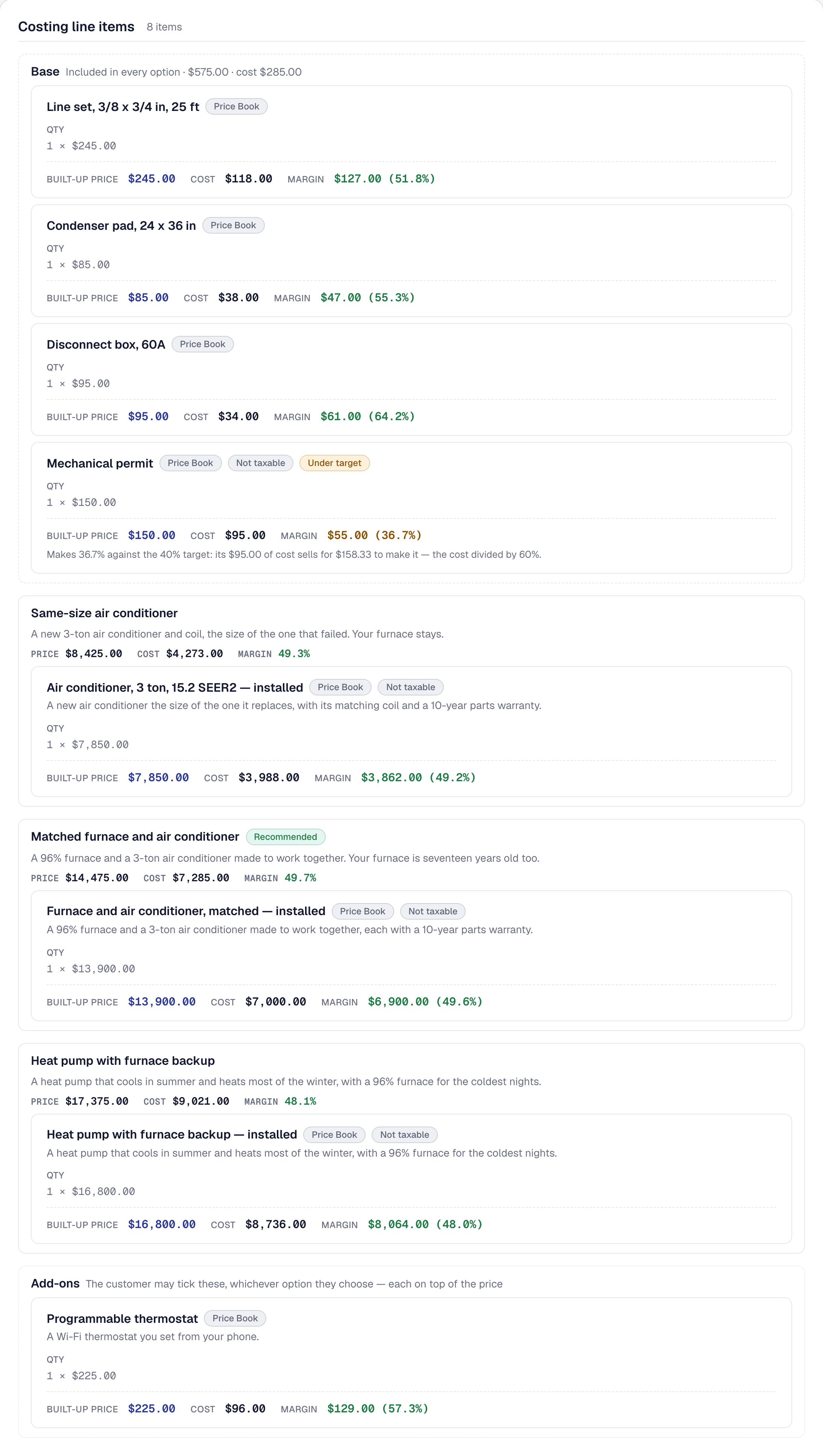
The office quotes the replacement three ways from the Price Book: the same-size air conditioner, a matched furnace and air conditioner — the furnace is seventeen years old too — and a heat pump with the furnace for backup. What every option takes, the line set, the pad, the disconnect and the permit, is in the base, and a thermostat is an add-on the homeowner can tick. Each option shows its price, its cost and its margin before it is sent.
Won, with a deposit
Take the deposit when they accept
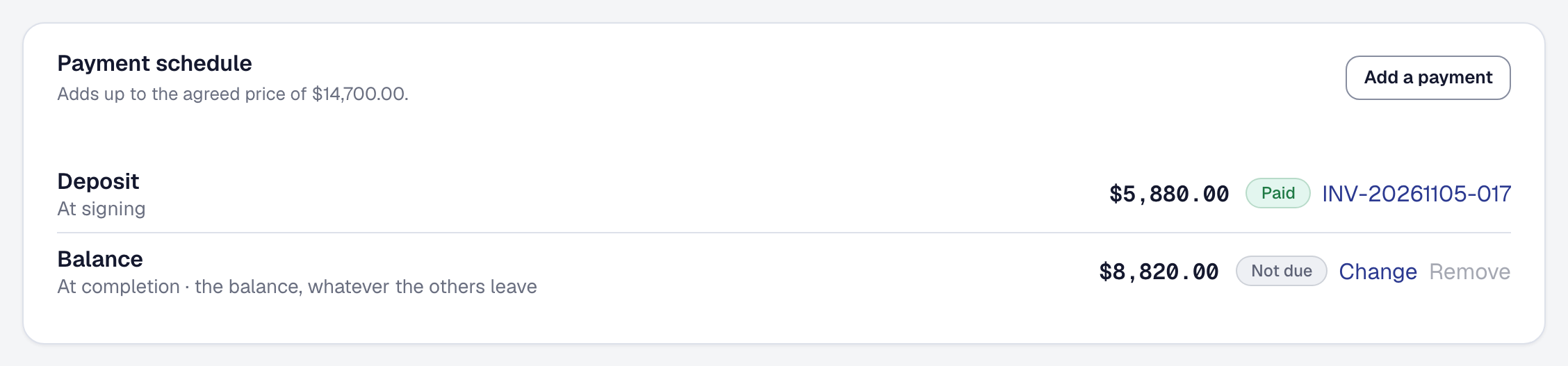
The homeowner signs on their own page for the matched system with the thermostat, $14,700, after a code sent to their email. The proposal asked for 40% at signing, so the deposit is invoiced with the signed copy and paid by card, and the job is made; the balance waits for the work to be done.
In full: Proposals — Say how your client pays
Scheduled
Plan the change-out
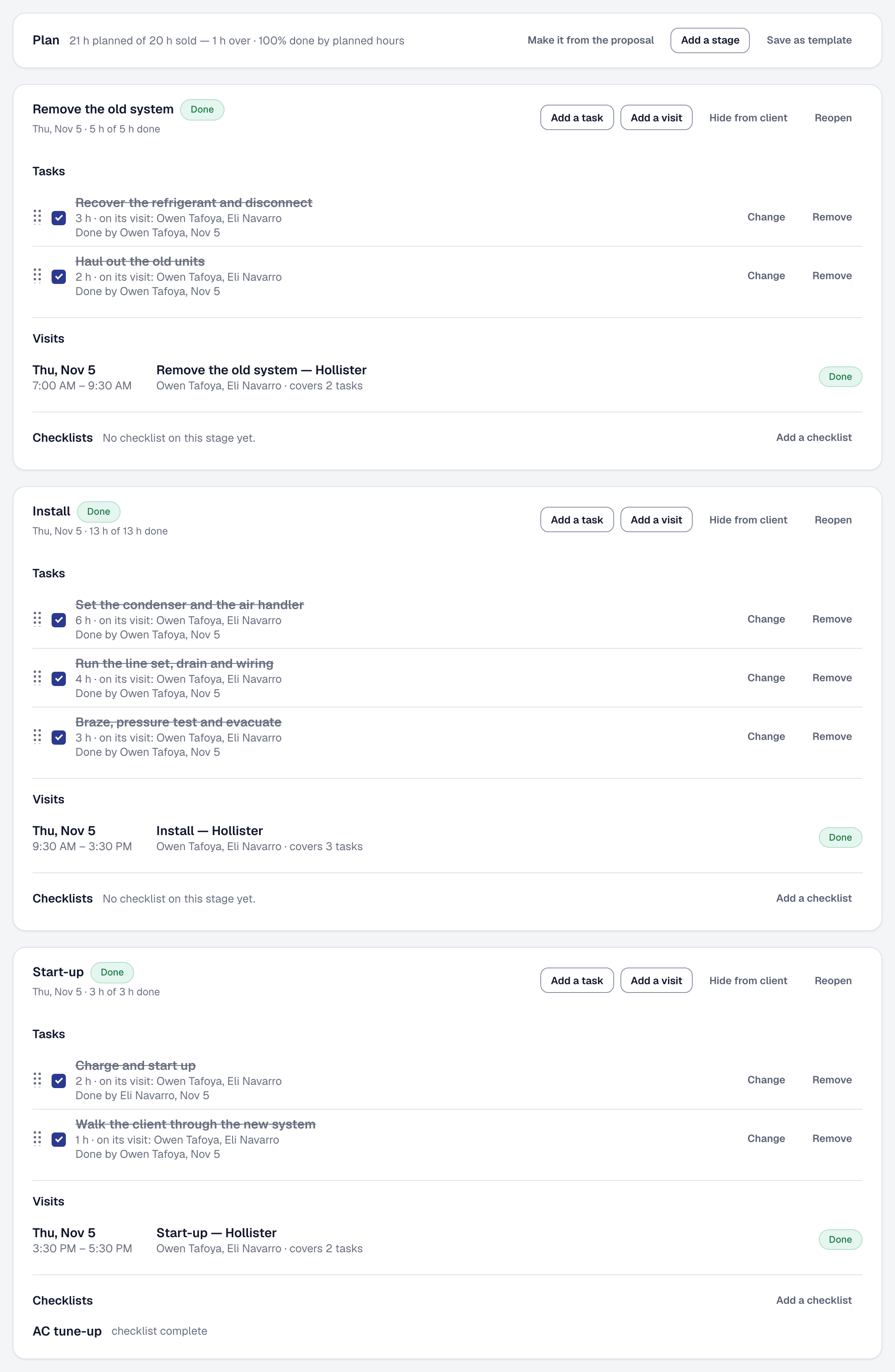
The change-out is planned from the kit’s template in three stages — take out the old system, install the new one, start it up — and worked in one long day by the lead installer and the technician, a visit for each stage. Every hour is logged against its task, and the plan says plainly how it went: 21 hours planned of 20 sold, an hour over.
In full: Projects — plan a big job in stages — Lay out the stages and their tasks
Done, and proved
Keep the refrigerant record
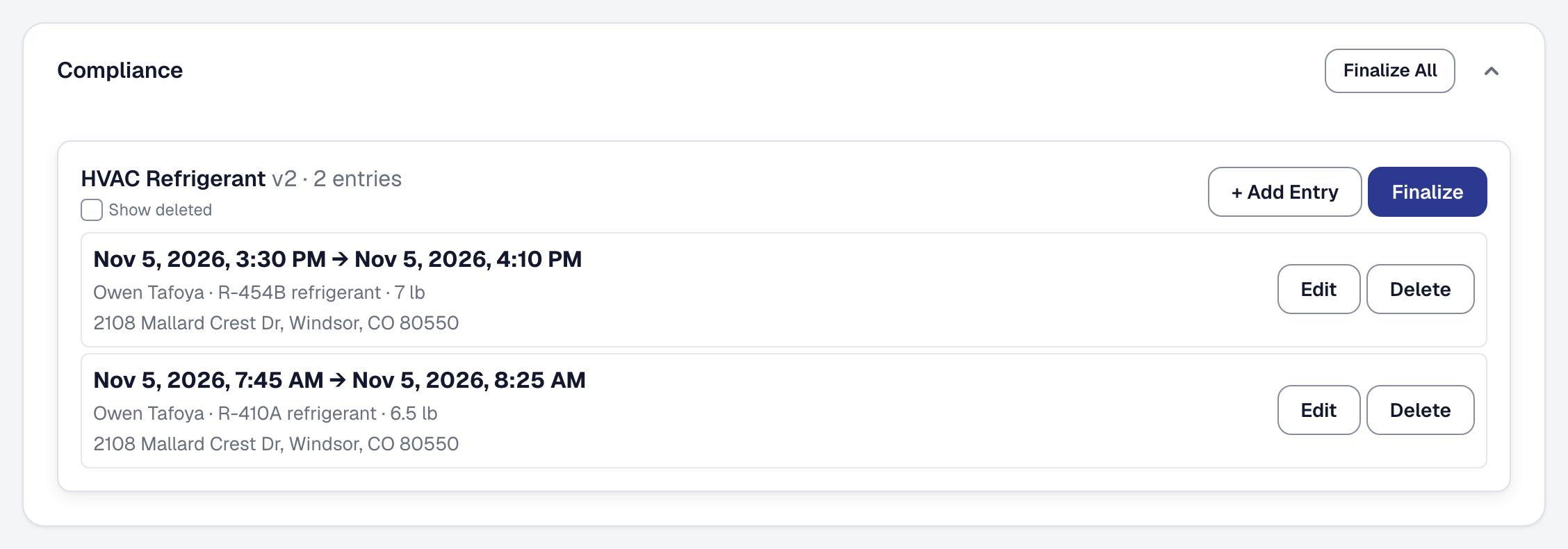
Refrigerant is regulated, so the change-out keeps its record on the job as the work happens: 6.5 pounds recovered from the old system in the morning, and 7 pounds of R-454B charged into the new one at start-up, each by the certified installer and against the unit’s serial number. The kind of work carries the record, so no replacement goes without one.
In full: Field service compliance — Capture the work in the field
Put the new units on the record
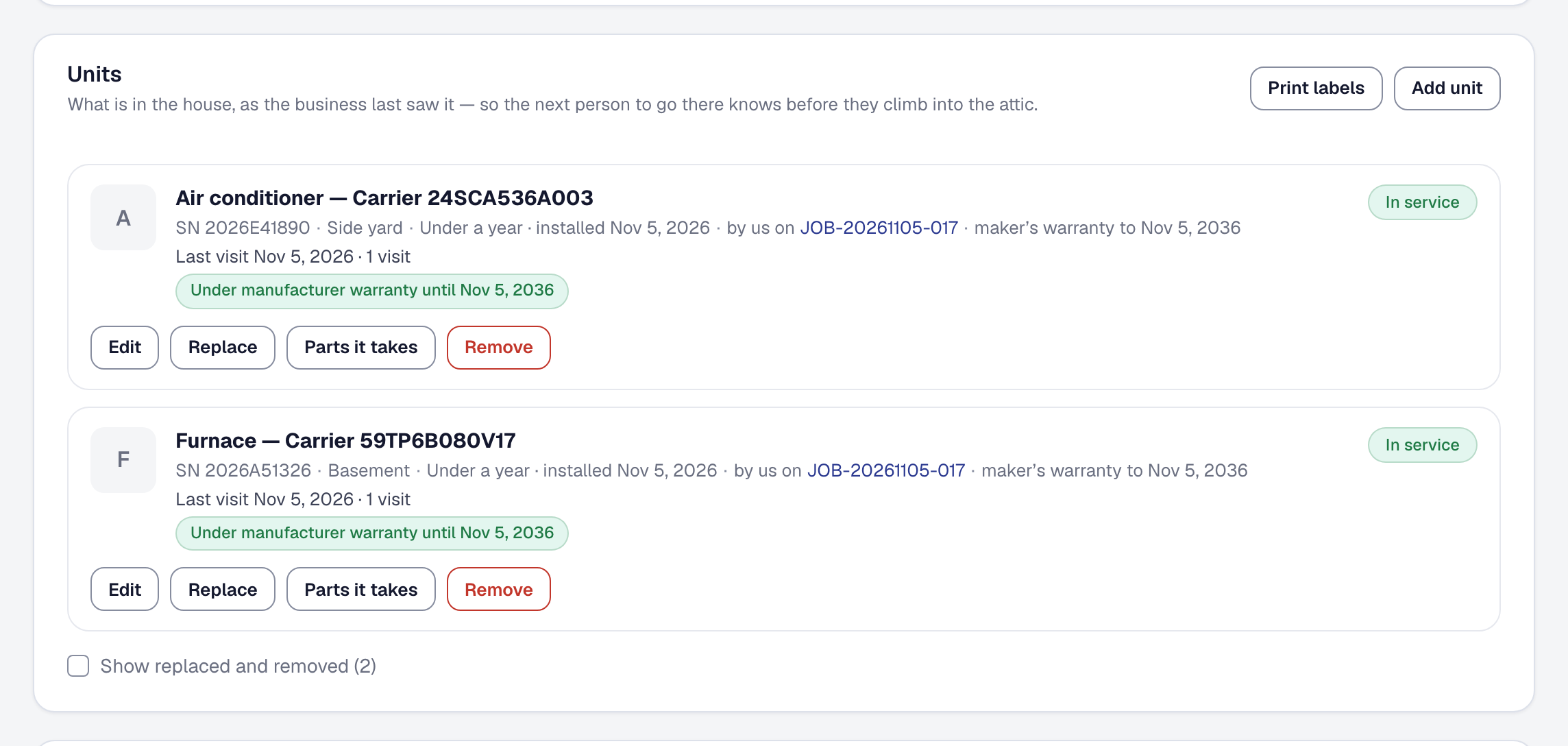
Replacing a unit keeps the old one, marked replaced with its history, and puts the new one in its place: a Carrier air conditioner and furnace, installed by this job, under the makers’ warranties to 2036. The business hears before a warranty ends, and the next tune-up starts from what is there now.
In full: Units at a client's property — Replace or remove a unit
Paid
Bill it when it is done
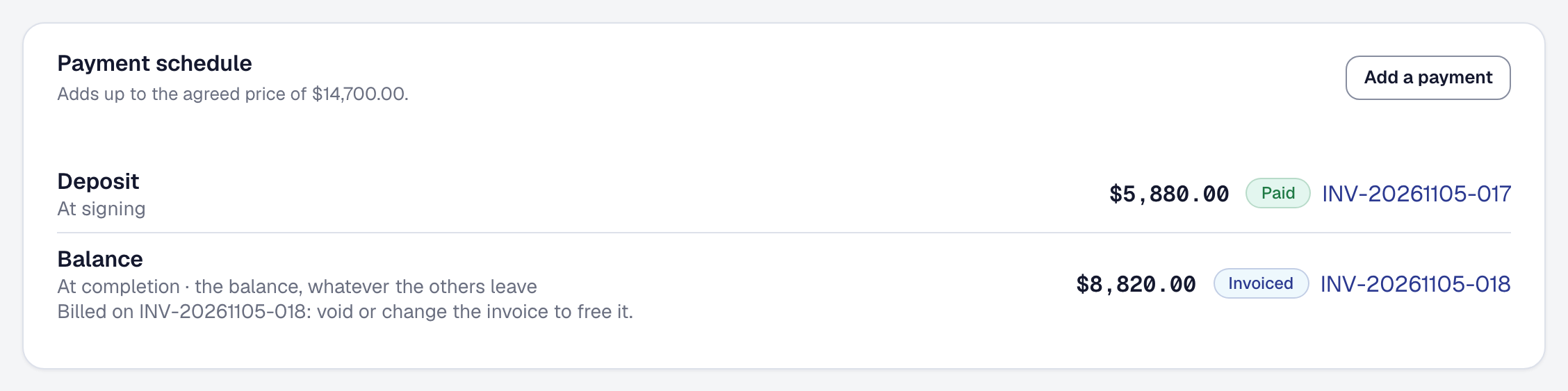
When the change-out is finished, the balance the deposit left — $8,820 — is invoiced from the job’s payment schedule, so the bill names the job and what it is for. The deposit beside it is already paid.
In full: Milestones and the payment schedule — Say what your client pays and when
What it made, and the books
See what the job made
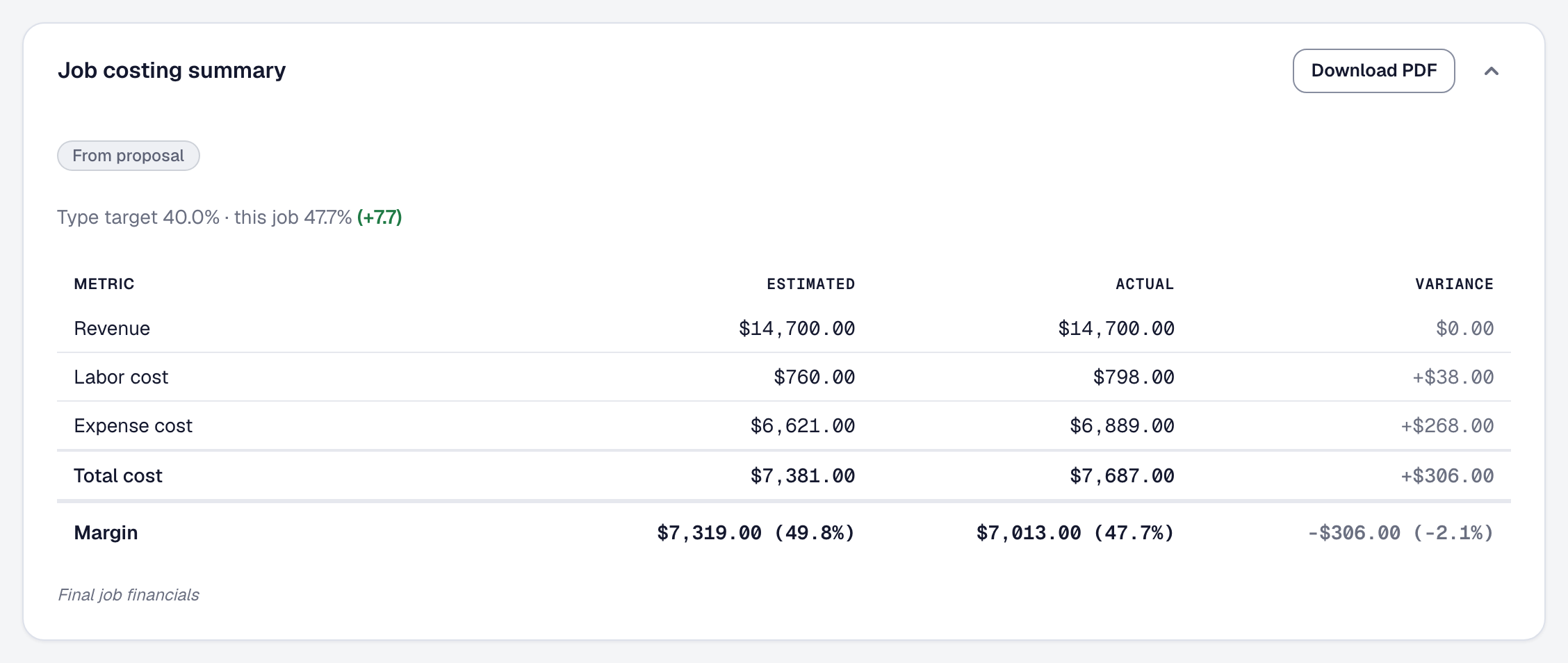
Paid in full, the change-out stands against its quote: $7,013 made on $14,700, 47.7% against the 49.8% it was quoted at. The hour over, a flue kit the quote did not name and the refrigerant make the difference, and the job still clears the business’s 40% target by 7.7 points.
In full: Job costing and margins — Watch a running job against its estimate
Keeping the customer
Sell the maintenance plan
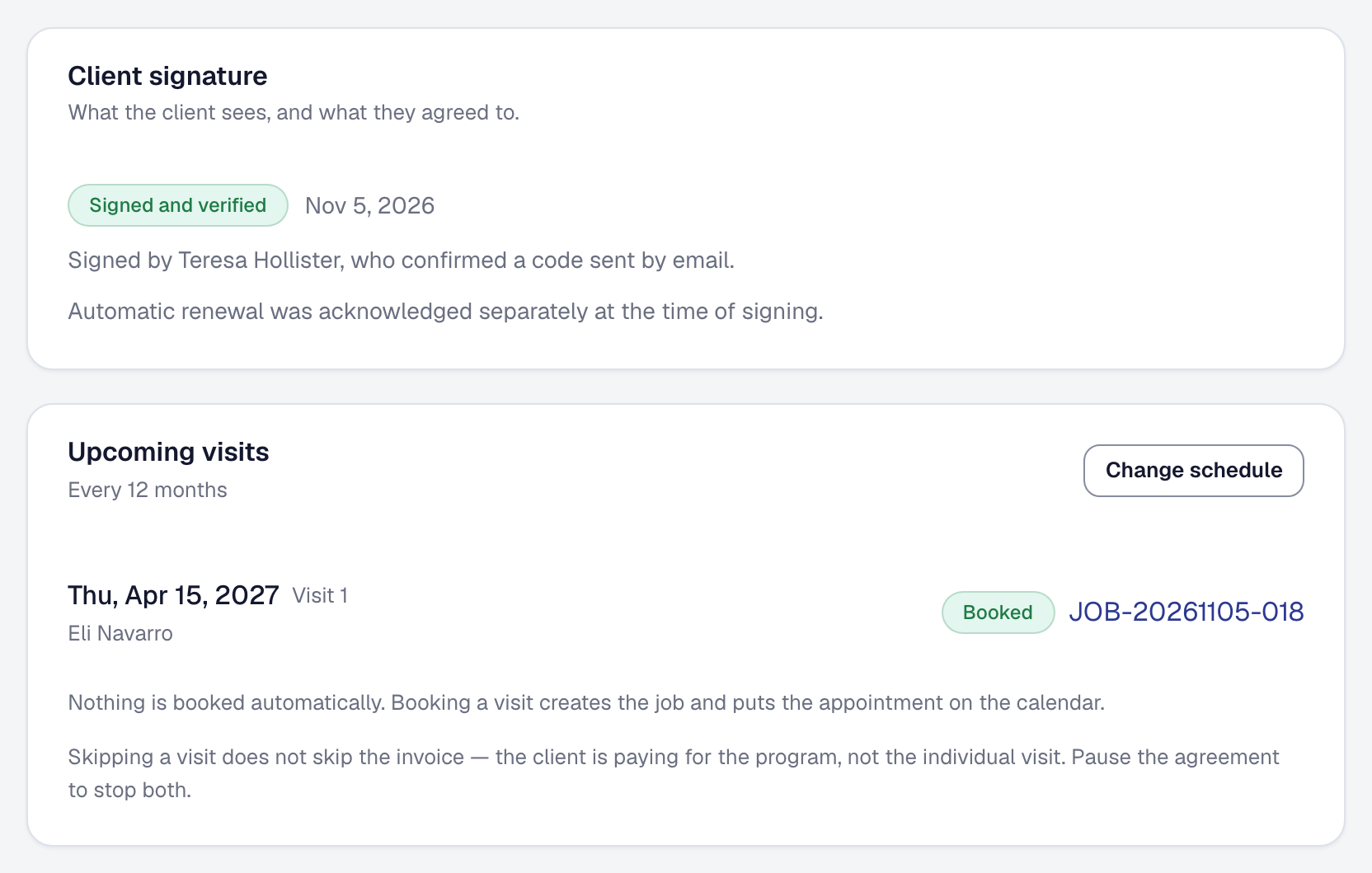
The new system is the start of a maintenance plan: a tune-up of the air conditioner every spring, billed by the year, signed by the homeowner on their own page with its automatic renewal acknowledged on its own. Its first visit is already booked as a job for next spring, with the tune-up’s checklist on it.
What it does not do yet
What an HVAC business might look for that SMG Tools does not do yet, and what you do today instead.
- Card readers at the door. Your client pays the invoice online, by card or Apple Pay.
- Tap to Pay on your phone, with no reader. Your client pays the invoice online, by card or Apple Pay.
- Where each vehicle is right now, and its drive and idle time priced into each job. The Day Board shows who is running behind, from the statuses your crew taps, and Arrival proof records when and where they arrived.
- Two-way accounting sync, with what changes in QuickBooks or Xero coming back. On Professional, Accounting sync sends your customers, invoices, payments and costs to QuickBooks Online or Xero as they happen.
As a video, on YouTube: Run an AC replacement from the no-cool call to what the job made.