
Units at a client's property
Keep a record of the equipment you service at each property — what it is, when it went in, and everything you have done to it.
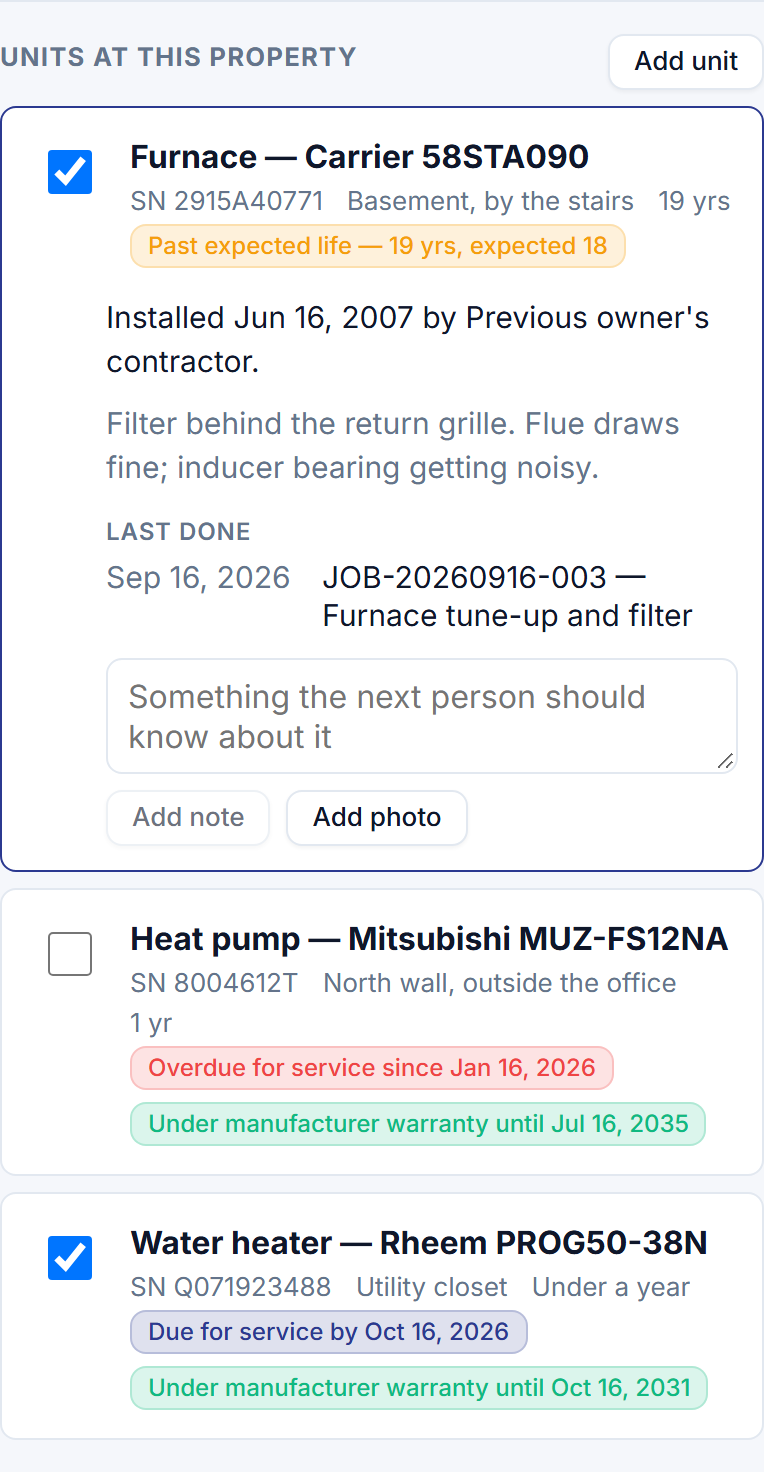
A technician arriving at a house should know what is in the attic before they climb into it. A unit is the record of a piece of equipment you service at a client’s property — the furnace, the water heater, the rooftop unit — with its details and everything that has ever been done to it.
Units belong to your client, not to you. Your own vans and machines are tracked separately as equipment, which is a different thing on purpose.
Add a unit to a client
Open a client and add a unit to their property. Record what it is: the make, the model, the serial number, where in the building it is, when it was installed and by whom, and what servicing it needs.
You do not have to fill everything in at once. The serial you took a picture of today is worth recording even if the install date is a guess nobody has made yet.
Arrive knowing what is there
The day’s visit lists the units at that property with their model, serial, age, and the last three things done to them.
That is the difference between “there’s a boiler somewhere in the basement” and knowing you are looking at a nine-year-old unit you replaced a pump on eighteen months ago.
Build the history without extra work
A unit’s history accrues from the work you were doing anyway:
- A job names the units it touched, so the visit lands on the record.
- A compliance entry’s serial number links to the unit it was taken on, rather than being typed into a box and lost.
- A measurement taken on a unit is kept against that unit, so next winter you can see what it read last year.
The unit’s page is then the service history a customer asks for and a technician needs, and neither of you had to assemble it.
Find the work that is due
Units due on the Clients page pulls together every unit across every client that is due for service. It is the list to work from when you are filling a quiet week, and it is built from equipment you already recorded rather than a reminder somebody had to set.
Bring your units in from somewhere else
Import units on the Clients page takes a file of equipment against your existing clients, so moving from another system does not mean re-keying a decade of serial numbers. See Importing and exporting.
This page describes Client Equipment — The Units at a Customer's Property. It is written from that feature’s record and covers what has shipped, never what is planned.